The shock hit me before the cold did. One moment I was asleep, wrapped in the thin comfort of early morning dreams, and the next I was gasping as icy water poured down my back and soaked through my clothes. The chill cut straight to my bones, sharper than the winter air seeping through the open window. Standing over me was my mother-in-law, gripping the empty bucket, her lips curled into a small, satisfied smile. She did not shout or scold. She simply turned around and walked out, as if humiliating me was part of a perfectly normal morning routine.
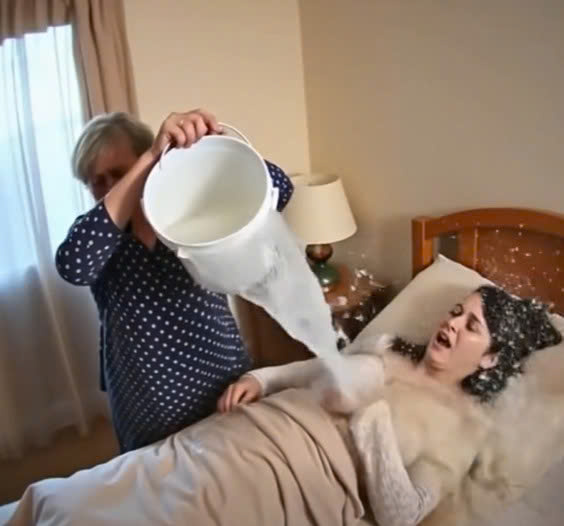
For several seconds, I couldn’t even move. Water dripped onto the floor, my hands trembled, and my heart pounded with a mix of disbelief and shame. I felt exposed, not just physically but emotionally. From downstairs, I could hear the faint clink of dishes and the sound of my husband moving around the kitchen, completely unaware of what had just happened. I knew that if he had seen it, he would have been furious, yet a part of me wondered how long he could continue excusing his mother’s behavior as “just the way she is.”
As I wrapped myself in a towel and changed into dry clothes, my mind wandered through the past two years of my marriage. From the very beginning, I had tried everything to earn her approval. I learned her routines, followed her household rules, helped with chores without being asked, and organized family gatherings to bring everyone closer. I respected her traditions even when they conflicted with how I was raised. I told myself that patience and kindness would eventually soften her attitude toward me. But no matter how hard I tried, her disapproval lingered, constant and unyielding, like a wall I could never climb.
That morning, something shifted inside me. The bucket of water wasn’t just a cruel prank or a moment of anger. It was a line crossed, a clear message that my silence had been mistaken for weakness. Standing alone in that room, still shivering, I realized I had reached a crossroads. I could continue swallowing my hurt to keep the peace, or I could finally speak up and protect my dignity. The choice felt terrifying, but also strangely liberating.
I took a deep breath and walked downstairs. My husband was sitting at the dining table, sipping his coffee and scrolling through his phone. When he looked up and saw me, his expression changed instantly. My hair was still damp, but what caught his attention was my face. There was no confusion there, only resolve. He opened his mouth to ask what was wrong, but I raised my hand gently and turned toward his mother, who was standing near the counter.
I spoke slowly, choosing my words with care. I told her that I had always respected her as my husband’s mother and genuinely wanted a peaceful relationship. I reminded her of the effort I had made to fit into the family and honor her place in it. Then I addressed what she had done. Pouring cold water on someone to wake them up, I said, was not discipline or tradition. It was humiliating and hurtful. I deserved respect, just as she did.
The room fell silent. My mother-in-law’s confident expression faltered, replaced by something closer to surprise. It was as if she hadn’t expected me to confront her so calmly, so directly. I continued, explaining that I loved her son deeply and that we were building a life together. For that life to be healthy, there needed to be boundaries. I told her I hoped we could coexist with mutual respect, not hostility.
Before she could respond, my husband spoke. His voice was steady but firm. He told his mother that what she had done was unacceptable and that he would not tolerate anyone treating his wife that way. He made it clear that loving his mother did not mean allowing her to undermine our marriage. Hearing him say those words felt like warmth spreading through my chest, easing the lingering cold I had carried all morning.
My mother-in-law didn’t argue. She didn’t apologize either, at least not right away. She stood there quietly, her gaze lowered, as if weighing something she had never considered before. The tension in the room was heavy, but it was different now. It felt less like hostility and more like the uncomfortable beginning of change.
In that moment, I understood that standing up for myself was not an act of rebellion but an act of self-respect. I had finally drawn a boundary, not with anger or insults, but with honesty. Supported by my husband, I felt stronger than I ever had. The cold that had jolted me awake hours earlier was gone, replaced by a cautious sense of hope.
That morning taught me a lesson I will never forget. Peace should never come at the cost of dignity, and love does not require enduring mistreatment in silence. Sometimes, it takes an unexpected shock to remind us of our own worth. And sometimes, the coldest mornings become the turning points that lead us toward a warmer, healthier future.