From the time I was a teenager, motherhood was never just a distant possibility—it was a future I could picture with surprising clarity. My husband and I were high school sweethearts, the kind who passed notes between classes and talked about “someday” as if it were already circled on the calendar. Long before we chose careers or apartments, we gave imaginary children nicknames. We laughed about whose smile they might inherit and whose stubborn streak would show up first. At the time, those conversations felt lighthearted and playful, but they quietly rooted themselves deep in my heart.
Years later, when a pregnancy test finally confirmed that I was expecting, I stared at it longer than necessary. I felt suspended between laughter and tears. It was surreal, like life had quietly fulfilled a promise it made to us years ago. I wanted to tell my husband in a way that honored how meaningful the moment felt. So I bought a tiny onesie that read, “And so our escapade begins,” folded it carefully into a small gift box, and tucked in a handwritten note written as if it were from our future baby.
When he came home from work, I handed him the box with a nervous smile. He opened it slowly, confusion softening into realization. His eyes filled instantly. He looked at me and said, simply, “We made it.” Not “We’re pregnant.” Not “This is happening.” Just “We made it.” We sank to the kitchen floor laughing and crying, already imagining bedtime routines, first steps, and a life we hadn’t even met yet. Keeping the secret for even a few days felt impossible. Joy that big wants to be shared.
The first few months of pregnancy were gentle. I had no morning sickness, no dramatic scares—just steady appointments and reassuring updates. Each visit confirmed that our baby was growing well. I allowed myself to believe this would be simple. Then came the anatomy scan.
The ultrasound technician grew quiet. She excused herself and returned with the doctor. Words like “cystic hygroma” drifted toward me, heavy and unfamiliar. I nodded as though I understood, but inside, fear tightened its grip. The doctors explained that the finding could be associated with certain genetic conditions and recommended an amniocentesis to gather more information. The procedure was emotionally draining, but when the results came back normal, relief washed over us—cautious relief, the kind that still carries a shadow.
From that point on, our pregnancy shifted from routine to carefully monitored. Doctors began treating the cystic hygroma and our baby—whom we had named Gavin—as separate concerns because Gavin himself continued to grow right on schedule. Later imaging revealed a lymphatic malformation. Not long after, I was diagnosed with gestational diabetes. Then came preeclampsia. Each complication layered onto the next, turning what we had imagined as straightforward into something complex and uncertain.
Hospital visits became frequent. Blood pressure checks and glucose readings became part of daily life. I grew accustomed to sterile hallways and the quiet hum of medical equipment. Still, every time I felt Gavin kick, I was reminded that he was there—active, resilient, and very much fighting alongside us.
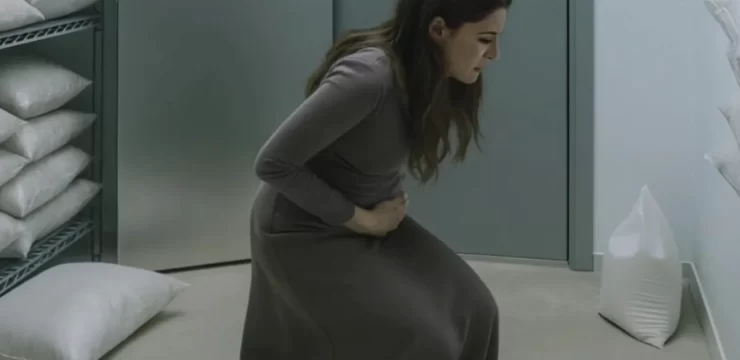
In February 2018, just a week before my scheduled delivery date, my body decided it had its own timeline. Contractions began subtly at first, then strengthened quickly. By the time I was admitted to the hospital, events unfolded fast. My husband rushed home to gather our bags while I remained in a room filled with nurses and physicians, monitors beeping gently in the background. I focused on breathing, trying to anchor myself in the thought that this was the moment I had dreamed about for years.
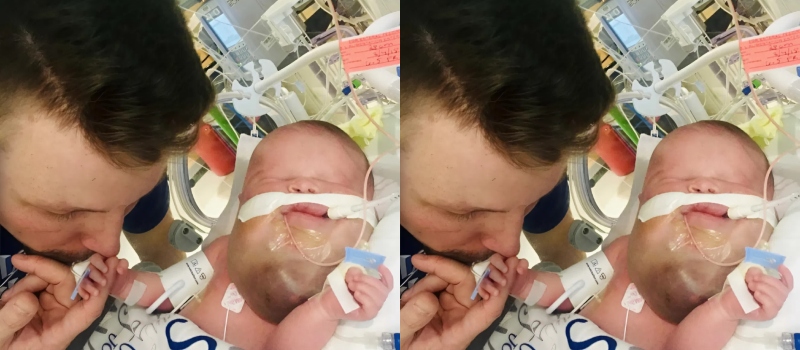
Gavin was born into a carefully controlled urgency. Medical professionals surrounded him immediately, assessing his breathing and monitoring his condition. I heard his cry only briefly before he was taken to the neonatal intensive care unit. I remember lying there with empty arms, feeling both overwhelming love and deep fear at the same time. It was a confusing blend of emotions—gratitude that he had arrived and anxiety about what lay ahead.
The days that followed blurred together. My routine revolved around pumping milk, visiting the NICU, speaking with specialists, and learning terminology I had never expected to understand. Gavin remained steady. Discussions about potential procedures became part of daily conversations. The lymphatic malformation required careful monitoring and treatment. I learned to read monitor screens and to celebrate small milestones: a stable oxygen level, a successful feeding, a few extra ounces gained.
Hope became practical. It wasn’t built on grand reassurances but on incremental progress. Each positive update felt like a small victory. One afternoon, as I sat beside Gavin’s crib, a nurse smiled and said, “He’s stronger than he looks.” I held onto those words.
Weeks later, we were finally able to bring him home. Life didn’t suddenly become effortless, but it became ours. The quiet of our living room felt sacred. Gavin grew into a curious, determined little boy. His early challenges seemed to shape his personality—resilient, observant, thoughtful.
Years later, on a peaceful evening, Gavin—now old enough to ask meaningful questions—noticed a faint scar and asked where it came from. I explained gently that when he was born, his body had worked very hard to become the strong person he is today. He listened carefully and then asked, “So I was brave before I even knew it?”
I nodded, emotion catching in my throat. Yes, he was brave before memory, before understanding, before language.
That night, after he fell asleep, my husband and I sat quietly together. We realized something important. The unexpected ending to our story wasn’t fear or heartbreak—it was gratitude. Not gratitude for an easy path, but for a real one. We hadn’t simply reached parenthood. We had been shaped by it. The uncertainty, the hospital rooms, the long nights—all of it had carved resilience into us.
We once said, “We made it,” sitting on our kitchen floor at the beginning of this journey. Years later, those words carried deeper meaning. We made it through fear. We made it through complications. We made it through moments that tested everything we thought we knew about strength.
And in the process, we were changed by a tiny boy who taught us that courage can arrive long before we recognize it—before memory, before words, before we fully understand its power.