Many people around the world are familiar with the musical film Grease, and even those who have never watched it from beginning to end can likely recognize a few of its iconic songs. Released in the summer of 1978, the movie quickly became a cultural phenomenon, especially among teenagers of that era. For countless young viewers, hearts skipped a beat the moment Danny Zuko appeared on screen in his leather jacket, effortlessly cool and full of swagger.
The film followed the whirlwind romance between Danny, the confident leader of the T-Birds, and Sandy Olsson, the sweet Australian girl who captured his heart during a summer fling. At the end of that unforgettable summer, both believed their romance was over when Sandy returned to Australia. Fate, however, had other plans. During a school football game, Sandy was revealed as the newest student at Danny’s high school, turning his world upside down in front of his friends.
Trying to maintain his tough image, Danny pretended their summer romance had meant nothing, brushing it off as if he were completely unaffected. Yet it didn’t take long for his feelings to resurface. Beneath the bravado was a young man who simply couldn’t resist Sandy’s charm. Their love story, filled with misunderstandings, music, and dance, became one of the most memorable romances in film history.
Decades later, those songs and dance routines still linger in the minds of audiences. Many fans can recall the lyrics, the choreography, and even the emotions tied to specific scenes as if they watched the movie just yesterday. That sense of nostalgia remains powerful, connecting generations through music and movement.
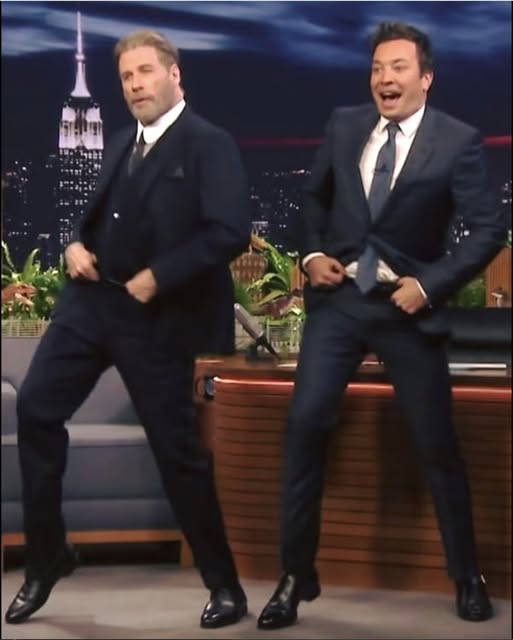
To celebrate the 40th anniversary of Grease, John Travolta, who famously portrayed Danny Zuko, made a special appearance on The Tonight Show Starring Jimmy Fallon. The moment instantly sparked excitement among fans, many of whom wondered whether Travolta still had the same magic that once defined his performances.
During his conversation with Jimmy Fallon, Travolta shared insight into how some of the film’s dance moves came to life. He explained that he grew up surrounded by novelty dances, which were popular social trends long before Grease ever reached theaters. When it came time to choreograph the finale for the song “You’re the One That I Want,” Travolta recalled suggesting an idea rooted in those old-school moves.
He told Fallon that he proposed using a “four corners” style of dance, something familiar from his youth. The choreographer, intrigued, asked him to demonstrate. That suggestion ultimately helped shape one of the most recognizable dance moments in movie history, proving that creativity often comes from personal experience rather than formal training alone.
As the studio audience listened, their excitement was unmistakable. Fallon, clearly fascinated, asked Travolta if he would be willing to show the move live on stage. The crowd erupted with applause, sensing that they were about to witness something special. When the unmistakable Grease music began to play, a wave of nostalgia washed over the room.
At 64 years old, Travolta stepped into the spotlight once again, ready to remind the world why he had earned his reputation as a dance icon. With confidence and ease, he performed the familiar moves, drawing cheers and admiration from the audience. It wasn’t about perfection or speed; it was about rhythm, memory, and joy. His performance proved that passion for dance does not fade with age.
Fans watching from home were just as thrilled. For many, seeing Travolta move to the same music that defined their youth felt like reconnecting with a cherished part of their own past. It was a reminder that certain moments in pop culture never truly disappear; they simply wait to be rediscovered.
Travolta’s appearance also highlighted the lasting impact of Grease on entertainment history. Few films have managed to maintain relevance across so many decades, inspiring stage productions, sing-alongs, and endless tributes. The movie’s music, fashion, and themes continue to resonate, making it a timeless classic rather than a relic of the past.
What made the moment especially meaningful was its simplicity. There were no elaborate sets or complex choreography, just a man, some music, and a crowd eager to relive a beloved memory. Travolta’s willingness to embrace that nostalgia with humor and confidence only deepened fans’ appreciation for him.
Watching him dance again served as proof that talent, when paired with genuine enthusiasm, can transcend time. It wasn’t just about revisiting an old role; it was about celebrating a career built on connection, creativity, and joy.
For longtime admirers and newer fans alike, the performance was a reminder of why John Travolta remains such a beloved figure in entertainment. Whether through acting, dancing, or simply sharing stories, he continues to bring people together.
If you believe John Travolta still has the magic that once defined a generation, you’re not alone. Moments like this show that some stars never stop shining, no matter how many years pass.