Time did not feel ordinary for long across Tennessee. What began as a simple cold drizzle quietly coating sidewalks and windshields soon transformed into an unforgiving sheet of ice that reshaped daily life in a matter of hours. By the time many residents realized how serious the situation had become, highways looked like frozen mirrors, neighborhoods had gone dark, and the sound of cracking branches echoed through the air.
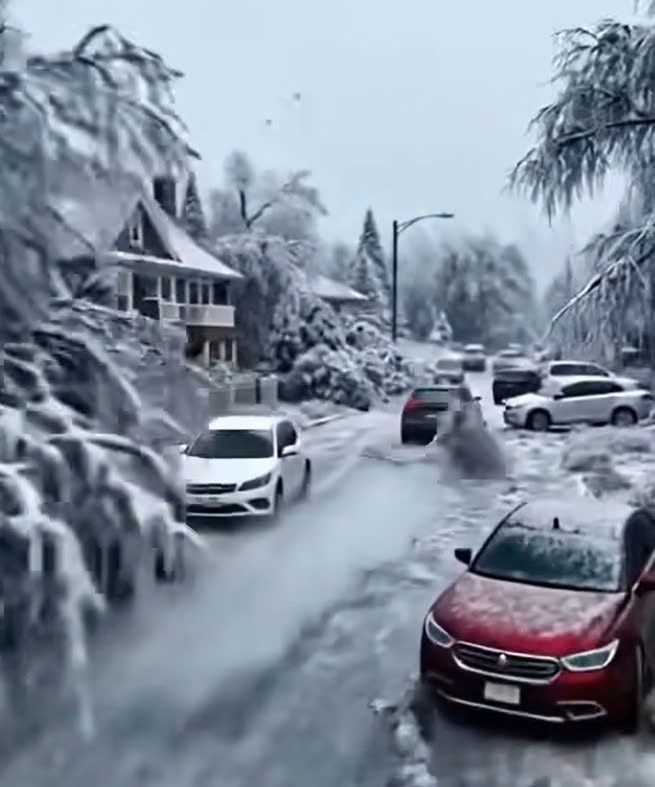
A powerful ice storm swept across the state, leaving more than 288,000 homes and businesses without electricity as freezing rain continued to fall. Communities in and around Nashville were hit especially hard, with the storm’s weight pressing down on infrastructure that simply could not withstand the buildup. As temperatures stayed below freezing, conditions worsened, and the danger increased with every passing hour.
Throughout the region, thick layers of ice clung to power lines, streetlights, and tree branches. Lines sagged low over roads or snapped altogether, cutting off electricity to entire blocks. Large trees, unable to bear the added weight, began to split apart. Heavy limbs crashed onto cars, fences, and rooftops, turning once-quiet streets into hazardous zones littered with debris.
Travel quickly became a serious risk. Roads that had been wet only hours earlier were transformed into slick, glass-like surfaces. Vehicles slid uncontrollably at intersections, and some drivers found themselves stranded, unable to move forward or backward. Authorities were forced to close major roadways to prevent further accidents, while emergency crews worked carefully to reach those who were already trapped.
The impact extended far beyond transportation. Homes and commercial buildings across Tennessee showed visible signs of strain. Roofs creaked and groaned beneath the accumulating ice, raising concerns about possible structural damage if the freezing conditions persisted. In some areas, residents reported hearing sharp cracks in the night as ice shifted and expanded, a constant reminder of the storm’s power.
Emergency officials did not downplay the severity of the situation. One official emergency communicator warned that conditions had become extremely critical, emphasizing that this was no longer a routine winter weather event. The combination of ice, power outages, and limited mobility created a dangerous environment, particularly for older adults, families with small children, and those with medical needs requiring electricity.
Utility workers and first responders mobilized immediately, working around the clock despite treacherous conditions. Repair crews navigated icy roads and fallen trees to reach damaged lines, often facing freezing rain and bitter cold as they worked to restore power. Their efforts were slow and difficult, not due to lack of determination, but because safety had to remain the top priority in such unstable conditions.
Residents were urged to stay indoors whenever possible and to avoid unnecessary travel. Officials stressed the importance of conserving heat, using generators safely, and checking on neighbors who might need help. Simple acts, such as sharing warmth, food, or information, became essential as communities leaned on one another during the crisis.
For many families, the outage disrupted more than comfort. Businesses closed temporarily, schools adjusted schedules, and daily routines were thrown into uncertainty. Without power, people relied on flashlights, blankets, and battery-powered radios to stay informed. In some neighborhoods, the darkness was broken only by the glow of emergency vehicles moving slowly through ice-covered streets.
Meteorologists warned that the situation could continue to evolve as additional freezing rain threatened already stressed systems. Even small amounts of new ice had the potential to cause further outages and damage. Each forecast update was followed closely, as residents hoped for warmer temperatures that could finally loosen the storm’s grip.
What started as an unremarkable winter weather pattern had escalated into a major emergency affecting large portions of Tennessee. The widespread power outages, dangerous road conditions, and ice-laden structures highlighted how quickly weather can shift from inconvenient to life-altering. As crews battled the elements and residents adapted to difficult circumstances, patience and cooperation became vital.
Recovery, officials cautioned, would not be immediate. Restoring power to hundreds of thousands of customers, clearing debris, and ensuring roads and buildings were safe could take days or even weeks. Yet amid the disruption, stories of resilience emerged, with neighbors helping neighbors and workers pushing through exhaustion to keep communities safe.
In the end, the ice storm served as a powerful reminder of nature’s force and the importance of preparedness. While the damage was significant, the response demonstrated the strength of coordinated efforts and shared responsibility. As temperatures eventually rise and the ice melts away, Tennessee will move forward, carrying lessons learned from a week when an ordinary drizzle became a defining challenge.
For emergency planners, the storm underscored the need for long-term investment in infrastructure capable of withstanding extreme weather. Ice storms, while less dramatic than tornadoes or floods, can be just as destructive when they linger. Officials encouraged residents to review emergency kits, maintain communication plans, and remain weather-aware during future winter systems. As the state begins the slow process of cleanup and repair, many Tennesseans are reflecting on how quickly normal life can be interrupted. The hope shared across affected communities is simple: restored power, safer roads, and a return to stability. Until then, vigilance remains essential, and the collective endurance shown during this storm stands as a testament to the resilience found throughout Tennessee.
Even after the ice clears, memories of the darkness, silence, and uncertainty will likely shape how residents prepare for winters ahead. Those experiences, shared statewide, may ultimately strengthen awareness, planning, and community bonds for years to come together.