More than five decades ago, a 13-year-old girl entered a Los Angeles welfare office and immediately concerned the people who saw her. She was extremely small for her age, struggled to walk normally, and spoke almost no words. To protect her privacy, she became known publicly as Genie. Her case later drew national attention and raised lasting questions about childhood development, language, trauma, and the responsibility adults have to protect vulnerable children.
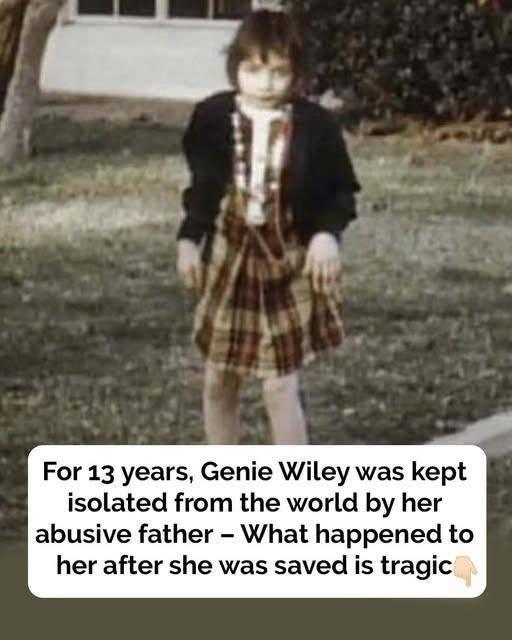
Genie Wiley was born in 1957 in Arcadia, California. She was the youngest of four children and one of two who survived childhood in the family.
Genie appeared healthy at birth, although she had a congenital hip condition that delayed her ability to walk. Her father interpreted the delay as evidence that she had a serious intellectual disability. Instead of seeking appropriate support, he increasingly isolated her from family life.
As the years passed, the situation became more severe. Genie spent much of her time confined to a small room and had little opportunity to move, explore, play, or communicate. Her father discouraged her from making noise and kept the household unusually quiet. She had almost no access to television, radio, ordinary conversation, or the social interaction that helps children develop language and emotional understanding.
Her mother had serious vision problems and was reportedly afraid of her husband. She struggled to protect Genie from the restrictive environment. Genie’s brother, John, grew up under the same controlling conditions and later described the lasting emotional impact of what he had witnessed.
Eventually, Genie’s mother left the home with her daughter and sought public assistance. When workers at a Los Angeles welfare office saw Genie, they realized something was seriously wrong. As professionals learned more about her background, however, the extent of her long-term neglect became clearer.
At the time she was discovered, Genie weighed about 59 pounds and had serious difficulties with movement, eating, communication, and basic self-care. She had received little exposure to normal speech during crucial developmental years. Doctors, psychologists, and linguists became interested in whether she might still acquire language after missing so much early social interaction.
Genie gradually learned basic words, including terms such as “blue,” “go,” and “mother.” She also showed abilities in drawing, puzzles, and nonverbal communication. Her progress demonstrated that she could learn and connect with people, but grammar remained extremely difficult. Researchers debated whether this supported the idea of a “critical period” during childhood when the brain is especially prepared to learn language.
Her case became scientifically important, but it also created ethical concerns. Genie was not merely a research subject. She was a child who needed stability, safety, education, and emotional support. As different professionals became involved, disagreements emerged over research priorities, caregiving decisions, funding, and responsibility for her long-term future.
After making some progress, Genie’s circumstances became unstable again. Around the time she turned 18, she briefly returned to live with her mother. Her mother later acknowledged that she could not provide the level of care Genie required, and Genie entered a series of foster placements and residential settings for adults with disabilities.
Unfortunately, those transitions were difficult. Changes in caregivers, reduced funding, and inconsistent support disrupted the progress she had made. People who had worked closely with her later expressed sadness about losing contact and concern that her language and social development had declined.
UCLA linguist Susan Curtiss, who had spent significant time working with Genie, said years later that she repeatedly tried to learn how Genie was doing. In a 2016 interview with The Guardian, Curtiss explained that she had been told Genie was alive and well but had not been allowed direct contact with her for many years.
Journalist Russ Rymer later explored the case in articles and in his book Genie: A Scientific Tragedy. His reporting emphasized both the scientific importance of Genie’s experience and the troubling ways her needs sometimes became entangled with research interests and institutional decisions.
Genie’s exact circumstances have remained private for decades. She is believed to have continued living in supported care in California, although details about her location have not been publicly disclosed.
The effects of the family’s history also extended to Genie’s brother, John. He later spoke publicly about the emotional burden of growing up in the household and said he tried to distance himself from painful memories. He last saw Genie in the early 1980s and later lost contact with other relatives.
Both of Genie’s parents faced abuse charges after authorities learned about conditions in the home. Her father died before the case against him could proceed in court. Genie’s mother lived for many years afterward and died in 2003.
Today, Genie’s story continues to be discussed in psychology, linguistics, education, and child welfare. It raises difficult questions about how language develops, how early relationships shape the brain, and how research should be balanced with compassion and care.
Most importantly, Genie should be remembered as more than a famous case study. She was a child whose opportunities for communication, connection, and ordinary development were severely restricted. Her life remains a reminder that protecting children requires attention, intervention, and sustained support. No child should become invisible inside a home, institution, or system. The enduring lesson of Genie’s story is that curiosity must never replace compassion, and every vulnerable child deserves safety, dignity, and the chance to be heard, and respectful long-term care from responsible adults.